


Medicare and Bone Density Tests: What You Need to Know


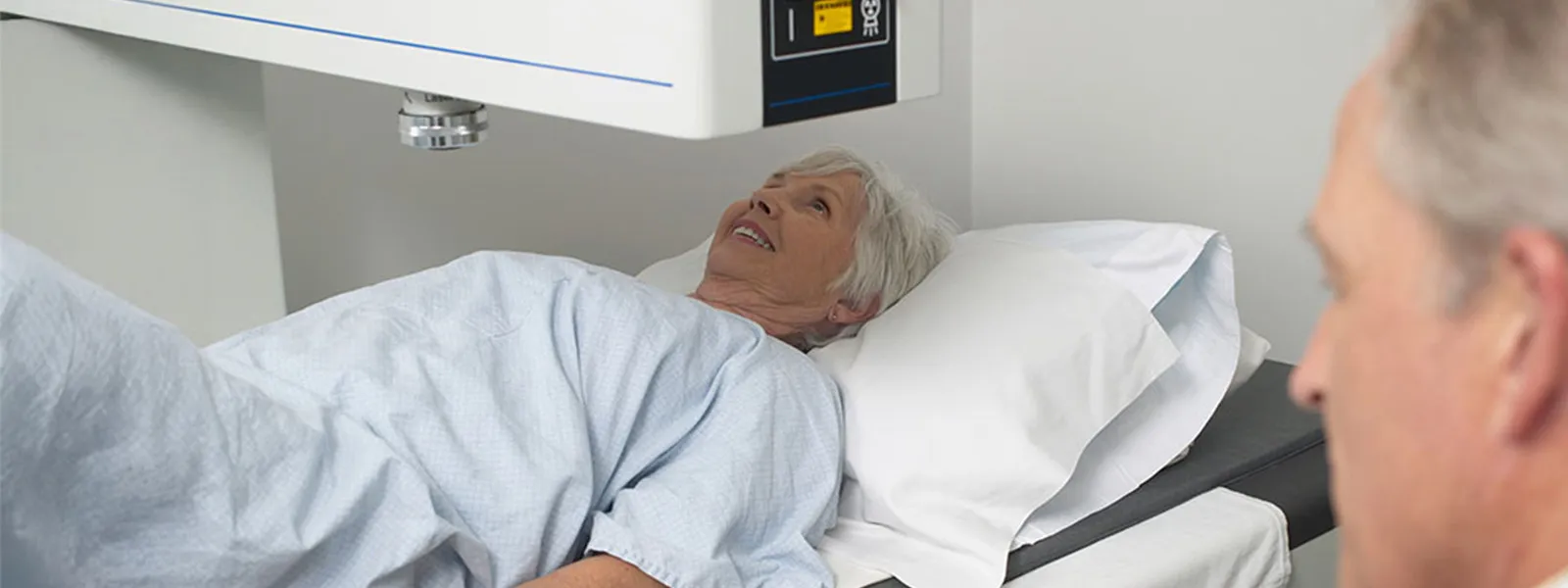
As you age, bones no longer retain the same strength they did when you were younger. Bone loss happens so slowly that you often don’t realize it until you experience a break or hear unexpected bone health news during a routine checkup.
This loss of bone strength is called osteoporosis. It develops gradually over the years, often without any physical symptoms or warning signs. You might feel perfectly healthy while your bones are quietly weakening. By the time you notice something’s wrong, such as a fracture from a minor fall, significant bone loss may have already occurred.
Early detection matters with this silent disease. Osteoporosis can lead to fractures from minor falls or even normal activities, such as bending over. It can lead to a greater chance of hip fractures, which are especially serious. More than 10 million Americans have osteoporosis, with another 44 million having low bone density.1
But your bone health doesn’t have to be a mystery. Medicare covers bone density testing when medically necessary, which means you can get clear answers without the financial worry. Here’s what you need to know about coverage and taking control of your bone health.
What is a bone density test and why is it important?
A bone density test measures how strong your bones are. The most common type is called a dual-energy X-ray absorptiometry, or DEXA scan. Think of it as an X-ray that sees inside your bones to check their thickness and strength.
The test is quick and non-invasive. You’ll lie on a padded table while a scanner passes over your body, usually focusing on your hips and spine. During the procedure, you may be asked to remove metal objects like jewelry, belts, or clothing with zippers, lie still, and briefly hold your breath while the scan is taken. The procedure typically takes about 15 to 20 minutes. 2
Women are at higher risk for osteoporosis, especially after menopause when estrogen levels drop. But men can develop it too, particularly after age 70.
The National Osteoporosis Foundation recommends bone density testing for:
Women 65 and older
Men 70 and older
Postmenopausal women under 65 with risk factors
Men 50-69 with risk factors
Anyone who has broken a bone after age 503
Risk factors include family history of osteoporosis, smoking, excessive alcohol use, certain medications and medical conditions like rheumatoid arthritis. 4
Does Medicare cover bone density tests?
Yes, Medicare Part B covers bone density tests when they’re medically necessary. But there’s a catch: you need to meet specific criteria.
Medicare will cover your bone density test if you’re:
A woman whose doctor determines you’re at risk for osteoporosis based on your medical history
Someone with vertebral abnormalities that suggest osteoporosis
Taking medications that can cause bone loss (like steroids)
Diagnosed with primary hyperparathyroidism (a condition where your parathyroid glands produce too much hormone, which can weaken bones)
Being monitored to see if osteoporosis treatment is working5
Your doctor must order the test and determine it’s medically necessary. Beyond screening tests, Medicare also helps by covering treatment medications when prescribed. Medicare Part B covers certain injectable osteoporosis drugs. While Medicare Part D (prescription drug coverage) covers many oral and self-administered osteoporosis medications, though coverage varies by plan.6 Medicare also covers follow-up tests to monitor treatment effectiveness.
Types of bone density tests covered by Medicare
Medicare covers two main types of bone density tests:
DEXA scans: These are the gold standard. They’re typically accurate and can detect even small changes in bone density. Medicare covers DEXA scans of the hip, spine or forearm.
Peripheral tests: These test bones in your wrist, heel or finger. They’re less accurate than DEXA scans but are useful for initial screening. Medicare covers these too, but doctors usually prefer DEXA scans for diagnosis.
How often does Medicare pay for bone density tests?
Medicare typically covers bone density tests once every 24 months (two years). But there are exceptions.
You might qualify for more frequent testing if you:
Take medications that cause bone loss
Have been diagnosed with osteoporosis and need monitoring
Have certain medical conditions that affect bone health3
Your doctor will determine if you need more frequent testing based on your individual situation.
Which Medicare parts cover DEXA scans?
Understanding which part of Medicare covers your bone density test depends on where and why you’re getting it. Different Medicare parts handle coverage in different situations, so it’s helpful to know what to expect based on your circumstances. Here’s how each part works:
Medicare Part A (hospital insurance) might cover the test if you’re an inpatient at a hospital and the test is part of your treatment.
Medicare Part B (medical insurance) covers bone density tests when you meet the eligibility requirements and the test is ordered by your doctor.
Medicare Part C (Medicare Advantage) must cover everything Original Medicare covers, including bone density tests. Some Medicare Advantage plans might offer additional benefits or different cost-sharing arrangements.5
How much does Medicare pay for bone density tests?
For most people getting bone density tests, Medicare Part B is the coverage that applies. When you meet Medicare’s requirements, Part B typically covers 100% of the cost for bone density tests. You won’t pay any out-of-pocket costs if:
You’ve met your Part B deductible for the year
The test is performed at a Medicare-approved facility
Your doctor accepts Medicare assignment5
Medicare Advantage plans might have different cost-sharing rules, so check with your specific plan. If you have Original Medicare, a Medicare supplement insurance plan may help cover the Part B deductible.
Additional costs and what Medicare may not cover
While Medicare covers medically necessary bone density tests, you might face out-of-pocket costs in certain situations:
When Medicare won’t cover the full cost:
Tests deemed not medically necessary
Testing more frequently than Medicare allows (unless medically justified)
Tests at non-Medicare-approved facilities
Medicare Advantage considerations: Your Medicare Advantage plan must cover what Original Medicare covers, but cost-sharing might differ. Some plans require copays or coinsurance for diagnostic tests.
Original Medicare cost-sharing: Even when Medicare covers your bone density test as a preventive screening, you might still face costs for related services and medications.
If you need ongoing treatments, such as injectable medications, physical therapy or other outpatient care, you’ll pay the annual Part B deductible, then 20% coinsurance for the Medicare-approved amount.
Medicare Supplement plans can help cover the Part B deductible and the 20% coinsurance, which may reduce your out-of-pocket costs for these services.
The importance of medical necessity: This can’t be overstated. Your doctor must determine that the test is medically necessary based on your risk factors, medical history and current health status. Without this determination, you could be responsible for the full cost.
One step in taking charge of your bone health starts with understanding your coverage options. If you meet Medicare’s criteria for bone density testing, you can get the screening you need without worrying about the cost. Talk with your doctor about whether a bone density test makes sense for you based on your age, medical history and risk factors. The earlier you catch bone loss, the more options you have to help protect your bones as you age.
Take charge of your bone health
Before scheduling a bone density test, check with your doctor to confirm whether it’s medically necessary based on your age, medical history, and risk factors. If you meet Medicare’s criteria for bone density testing, you can get the screening you need without worrying about the cost—but without that determination, you may be responsible for the full amount.
The earlier you catch bone loss, the more options you have to protect your bones as you age. Learn more about what Medicare covers and compare Medicare plans to find the coverage that fits your needs.
Frequently asked questions
Q1. What are the Medicare-approved risk factors for a bone density test?
Medicare-approved risk factors include being a postmenopausal woman at risk for osteoporosis, having vertebral abnormalities, taking bone-loss medications like steroids, having primary hyperparathyroidism or needing monitoring during osteoporosis treatment.3
Q2. Does Medicare cover DEXA scans without a prior diagnosis?
Yes, Medicare covers DEXA scans for screening purposes if you meet the risk factor criteria, even without a prior osteoporosis diagnosis. Your doctor must determine the test is medically necessary based on your individual risk factors.
Q3. Is osteoporosis treatment also covered by Medicare?
Yes, Medicare Part B covers certain injectable osteoporosis medications when prescribed by your doctor and administered by a healthcare provider. Medicare Part D (prescription drug coverage) also covers many oral and self-administered osteoporosis medications, though coverage varies by plan. 6
Q4. What are the qualifications for a free Medicare bone density test?
To qualify for Medicare coverage, you must meet specific medical criteria as determined by your doctor, have the test ordered by a Medicare-enrolled physician, and receive the test at a Medicare-approved facility. When these conditions are met, Medicare covers 100% of the cost.
Sources
1 Bone Health & Osteoporosis Foundation. What is Osteoporosis and What Causes It? Retrieved November 25, 2025, from www.bonehealthandosteoporosis.org/patients/what-is-osteoporosis/
2 Center for Disease Control. Facts About Bone Density (DEXA Scan). Retrieved December 1, 2025, from www.cdc.gov/radiation-health/data-research/facts-stats/dexa-scan.html
3 Bone Health & Osteoporosis Foundation. Evaluation of Bone Health/Bone Density Testing. Retrieved November 25, 2025, from www.bonehealthandosteoporosis.org/patients/diagnosis-information/bone-density-examtesting/
4 National Institute of Health. Osteoporosis. Retrieved December 1, 2025, from https://www.niams.nih.gov/health-topics/osteoporosis
5 Medicare.gov. Bone mass measurements. Retrieved November 25, 2025, from www.medicare.gov/coverage/bone-mass-measurements
6 Medicare.gov. Compare Original Medicare & Medicare Advantage. Retrieved November 25, 2025, from www.medicare.gov/basics/get-started-with-medicare/get-more-coverage/your-coverage-options/compare-original-medicare-medicare-advantage
7 Medicare.gov. What’s Medicare Drug Coverage (Part D)? Retrieved November 25, 2025, from www.medicare.gov/drug-coverage-part-d
Insurance products and services are offered by Mutual of Omaha Insurance Company or one of its affiliates. Mutual of Omaha Plaza, Omaha, NE 68175. Products not available in all states.
Item #664329
Suggested content for you in Medicare
-
Does Medicare Cover Physical Therapy?
-
Medicare Prior Approval in 2026: Key Changes and Processes
-
Dental Savings Plans for Seniors: Are They Worth It?
-
Does Medicare Cover Cataract Surgery?
-
ALS and Medicare Coverage Explained: Benefits, Costs, and Support
-
Medicare Memory Care Coverage
-
What Disabilities Qualify for Medicare Under 65? A Complete Guide
-
Medicare Chiropractic Coverage Explained: Costs, Limits and Benefits
-
Dermatology and Medicare Coverage
-
Understanding Medicare: 6 Surprise Medicare Costs to Avoid
Explore other topics
Staying Fit
5 Exercises for a Cardio Workout At HomeTraveling in Retirement
Top 5 Cities for Seniors to RetireHealth & Aging
Fun Activities for Seniors to Stay Healthy All Categories
 Medicare
 Retirement Planning
 Business Resources
 Life Insurance
 Financial Planning
 Health & Well-Being
 Travel & Living