


Pickleball Injuries in Seniors: How to Lower Your Risk


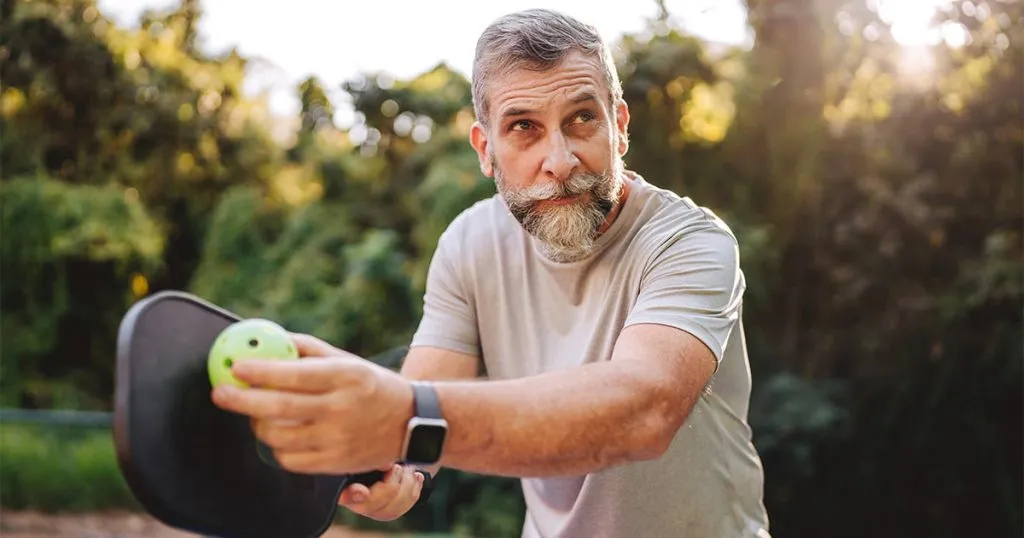
Pickleball can be a fun, social way to stay active as you age, but quick stops, turns, reaches and changes in direction may lead to injuries such as ankle sprains, knee pain, wrist or hand injuries, shoulder strain, Achilles or calf injuries and fall-related fractures. Warming up, building strength and balance, wearing supportive footwear, pacing yourself and talking with your doctor about pain or health concerns can help lower your risk without giving up an activity you enjoy.
Key takeaways:
Pickleball is often described as a low-impact activity, but quick movements, twisting, reaching and falls can still contribute to injuries.
Common pickleball injuries in older adults may involve the ankles, knees, wrists, hands, shoulders, calves or Achilles tendon. Falls can also lead to fractures.¹ ²
Warming up, stretching, wearing court-appropriate shoes, staying hydrated, pacing play and building strength and balance can help lower injury risk.
You should talk with your doctor before starting pickleball if you have pain, balance concerns, a history of falls, heart or lung conditions, joint problems, recent surgery or a new health concern.
If you fall, hear a pop, cannot bear weight, have swelling, numbness, chest discomfort, shortness of breath or pain that does not improve, stop playing and seek medical guidance.
Why pickleball injuries can happen after 65
Pickleball is popular because it can be social, fun and easier to learn than some other court sports. It can also help people stay active without requiring intensive running or heavy equipment.
Still, “low impact” does not mean “no risk.” Pickleball includes movements that can challenge balance, coordination, joints and reaction time, including:
Quick starts and stops
Side-to-side steps
Pivoting or twisting
Reaching for low balls
Backpedaling
Lunging near the kitchen line
Sudden changes in direction
Repetitive swinging
For adults 65+, those movements may be challenging if you have arthritis, past injuries, vision changes, balance concerns, slower reaction time or reduced strength. In the 2026 Mutual of Omaha Aging Well Survey, 38% of adults age 65+ said pain or injury had stopped them from being as active as they would like to be. Balance concerns stopped 19%, and fear of getting hurt stopped 15%.*
That does not mean pickleball is off-limits. It means preparation matters.
Mutual of Omaha chief medical officer Dr. Manoj Pawar, MD, FAAFP, says a well-rounded movement routine can help support safe activity as people age. “Strength training, cardio, balance and flexibility all work together to help people stay active and independent.”
What are the most common pickleball injuries in older adults?
Pickleball injuries can be sudden, such as a fall or ankle twist, or they can build over time from repeated movements. Research on emergency department visits has found that older adults make up a large share of pickleball-related injuries, with falls, fractures and wrist or hand injuries especially relevant for older players.¹ ²
If you have pain in a specific area, such as your knees, balance or mobility, you may want to review related guidance on knee exercises for seniors or balance exercises for seniors. You should also ask your doctor which movements are safe for your body.
Is pickleball safe for seniors?
Pickleball can be safe for many older adults, but safety depends on your health, balance, fitness level, joint comfort, playing style and how quickly you increase activity. For some people, doubles play, shorter games, indoor courts, slower pacing or beginner-level groups may be more comfortable than more intense competitive play.
Age alone should not be the only deciding factor. A 70-year-old who walks regularly, has good balance and plays at a steady pace may feel different from someone who is returning to activity after surgery, illness or a long break.
Before you play, ask yourself:
Have I had a recent fall?
Do I feel unsteady when turning or stepping sideways?
Do I have knee, hip, ankle, shoulder, wrist or back pain?
Do I get dizzy, short of breath or unusually tired during activity?
Have I had a recent surgery, injury or change in medication?
Has my doctor given me any activity restrictions?
66% of adults age 65+ say they rarely or never check with their doctor before starting a new physical activity.* But pickleball can involve more than casual movement, including quick turns, short sprints and balance shifts.
That is why Dr. Pawar recommends checking in first if there are any health concerns. “If you have health conditions or have not seen a doctor in a while, talk with your doctor before starting a new activity.”
9 ways to lower your risk of pickleball injuries
You cannot prevent every injury, but you can lower your risk by preparing your body, choosing the right setting and paying attention to early warning signs.
1. Start with your doctor if you have health or balance concerns
Before starting pickleball, talk with your doctor if you have:
A history of falls
Balance concerns
Arthritis or joint pain
Osteoporosis or low bone density
Heart or lung conditions
Diabetes or neuropathy
Dizziness or fainting
Vision changes
Recent surgery
A new medication
Pain that changes how you walk or move
Your doctor may suggest a physical therapist, occupational therapist, supervised class or a safer way to build up to court movement.
This is especially important if you are worried about falling. CDC’s STEADI program focuses on helping health care providers screen, assess and reduce fall risk among older adults.³ If you have fallen or feel unsteady, ask your doctor whether a fall-risk review would be helpful.
2. Warm up before you play
Pickleball warm-up exercises help prepare your muscles, joints and balance before more intense movement. A warm-up should feel easy and controlled, not rushed.
Try 5 to 10 minutes of gentle movement before playing, such as:
Warm-up exercise
How it helps
Easy walking
Raises your heart rate gradually
Side steps
Prepares your body for lateral court movement
Arm circles
Warms up shoulders before swinging
Shoulder rolls
Loosens the upper back and shoulders
Gentle torso turns
Prepares your trunk for rotation
Heel raises
Activates calves and ankles
Practice swings
Helps you ease into paddle movement
Short-court dinks
Lets you start with slower, controlled movement
Avoid jumping straight into competitive points when your body is still cold. Start at a slower pace and build gradually.
3. Use stretching to support mobility
Pickleball stretches for seniors and older adults should be gentle and controlled. Stretching should not cause sharp pain, dizziness or shortness of breath.
You may want to ask your doctor or physical therapist about stretches for:
Calves
Hamstrings
Hips
Shoulders
Wrists and forearms
Low back
If tightness or mobility limits make it harder to move comfortably, gentle stretching routines or stretching exercises for pain and mobility may give you a practical place to start.
Do not force a stretch. If a stretch causes pain, stop and ask your doctor or physical therapist what is appropriate for your body.
4. Build strength and balance off the court
Pickleball requires so much more than simply swinging a paddle. It requires leg strength, balance, reaction time, shoulder mobility and core control.
Adults 65 + need aerobic activity, muscle-strengthening activity and balance activity each week.⁴ A court sport like pickleball can support movement, but it may not address every area on its own.
Off-court exercises can include:
Sit-to-stands
Wall push-ups
Heel raises
Resistance band rows
Side steps
Supported balance exercises
Gentle squats
Light strength training
Walking or swimming on non-pickleball days


“The most important first step is to get yourself moving, even if that starts with simple daily activity.”
If you want to feel steadier on the court, strength training after 50 and low-impact exercises for older adults can help support the muscles and movement patterns you use during play.
5. Choose shoes designed for court movement
Running shoes are made for forward motion. Pickleball often requires side-to-side movement, quick stops and pivots. Shoes that do not support court movement may increase the chance of slipping, catching a toe or rolling an ankle.
Look for shoes that:
Fit well
Feel stable during side-to-side movement
Have good traction for the court surface
Do not slide around on your foot
Are not overly worn down
Feel comfortable with any inserts or braces recommended by your doctor
If you have foot pain, neuropathy, balance concerns or ankle instability, ask your doctor, podiatrist or physical therapist what type of footwear is safest for you.
6. Check the court and your surroundings
Before you start playing, take a minute to look around. Small hazards can interfere when the game speeds up.
Check for:
Wet spots
Cracks or uneven areas
Loose balls
Bags, bottles or towels near the court
Poor lighting
Crowded sidelines
Nets or dividers that are too close
Glare or visibility issues
If the court feels slippery or crowded, consider waiting, moving to another court or playing at a slower pace.
7. Avoid backpedaling when you can
Backpedaling can increase fall risk because it is harder to see where your feet are going. Instead of running backward for a lob, learn to turn and move safely or let the ball go.
This can be hard if you are competitive, but letting one point go is better than risking a fall. If you often feel off balance when moving backward, ask a coach or instructor about safer footwork.
8. Pace yourself and take breaks
Pickleball can feel easier than it is because it is fun and social. It is common to play “just one more game,” even when your body is tired.
To help lower risk:
Start with shorter sessions
Rest between games
Drink water
Avoid playing through heat or fatigue
Stop if your form changes
Avoid increasing playtime too quickly
Mix pickleball with walking, strength or flexibility work
27% of adults age 65+ say lack of energy or feeling too tired had stopped them from being as active as they would like to be.* Fatigue can make balance and reaction time harder, so breaks are important.
9. Do not ignore pain
Some mild muscle soreness can happen after activity, especially when you are doing something new. But pain that is sharp, worsening, one-sided or affecting how you walk or use your arm should not be ignored.
Stop playing and talk with your doctor if you notice:
Pain that gets worse during play
Swelling
Bruising
Numbness or tingling
Instability
Weakness
Pain that changes your stride
Shoulder pain that limits reaching
Wrist or hand pain after a fall
Knee pain that makes stairs difficult
Symptoms that do not improve with rest
Grimes notes that support can make starting or restarting activity feel more manageable. “Having someone with you when you start a new activity can help you feel safer and more confident.”
A simple pre-game pickleball safety checklist
Before you play, use this quick checklist:
Did I warm up for 5 to 10 minutes?
Am I wearing shoes that support side-to-side movement?
Is the court dry and clear of loose balls or bags?
Do I have water nearby?
Do I feel steady today?
Am I playing at a pace that fits my current fitness level?
Do I know when I will take breaks?
Am I willing to let a risky ball go?
Do I have pain, dizziness or shortness of breath that should be checked first?
If something feels off, it is okay to slow down, sit out or choose another activity for the day.
When to talk with your doctor about pickleball pain
Talk with your doctor before playing if you are unsure whether pickleball is safe for you, especially if you have pain, balance concerns, a history of falls, heart or lung conditions, joint problems, recent surgery or a new health concern. You should also contact your doctor if pain or symptoms appear after you play and do not improve.
Seek urgent medical care if you fall and hit your head, cannot bear weight, have severe swelling or deformity, hear or feel a pop followed by pain, have chest discomfort or pressure, have unusual shortness of breath, feel faint or severely dizzy, or have sudden weakness, numbness, confusion or trouble speaking.
If you are new to pickleball or returning to the game after taking a break, bring a few questions to your next doctor appointment:
Is pickleball safe for me based on my current health?
Should I avoid certain movements, such as pivoting, lunging or backpedaling?
Do I need a balance or fall-risk assessment?
Are there exercises I should do before playing?
Should I work with a physical therapist?
Are my shoes, braces or inserts appropriate?
What symptoms should make me stop playing?
How often should I play when I am just getting started?
Are my medications affecting balance, hydration or reaction time?
81% of adults age 65+ say they feel very or extremely comfortable discussing pain with their doctor, and 76% said the same about balance or fall concerns.* Those are exactly the kinds of topics that can help make pickleball safer and more enjoyable.
Support an active aging routine one step at a time
Pickleball can be one part of a healthy, active routine when you prepare well and listen to your body. Healthy aging at 65 often begins with simple habits like enjoying your favorite activities, that support your overall well-being and a proactive approach to your healthcare. As you plan for the future, reviewing your Medicare coverage options can help you choose protection that aligns with your needs today and in the years ahead.
Explore your options today with Mutual of Omaha’s Medicare Advice Center tool.
Frequently asked questions (FAQs)
Do a lot of seniors get hurt playing pickleball?
Pickleball injuries have increased as the sport has become more popular, and older adults make up a meaningful share of injury-related emergency department visits.¹ ² That does not mean every older adult will get hurt. Risk depends on balance, strength, health history, footwear, playing surface, intensity and how quickly someone increases activity.
Is 70 too old to play pickleball?
No, 70 is not automatically too old to play pickleball. In fact, many adults in their 70s and beyond enjoy the sport. The better question is whether pickleball is safe for your health, balance, joints and fitness level. Talk with your doctor if you have pain, falls, dizziness, shortness of breath, recent surgery or a chronic health condition.
What is the most common injury from pickleball?
There is not one single injury that affects everyone. Common pickleball injuries can include ankle sprains, knee pain, wrist or hand injuries, shoulder strain, Achilles or calf injuries and fall-related fractures. Falls are an important injury mechanism for older adults.¹ ²
What age is considered senior in pickleball?
“Senior” can mean different things depending on the tournament, league or recreation program. Some pickleball groups may use age 50+, 55+ or 60+ divisions. This article focuses mainly on adults 65+ because health, balance, injury recovery and fall risk can become more important considerations around Medicare age.
Is pickleball better exercise than walking?
Pickleball is not automatically better than walking. Pickleball may offer social connection, coordination, light cardio and agility, while walking can be easier to pace and may involve fewer quick direction changes. The better option depends on your goals, health, balance and doctor’s guidance. For many people, both can fit into an active routine.
How can you prevent pickleball injuries?
You cannot prevent every injury, but you can lower your risk. Warm up, stretch gently, wear court-appropriate shoes, check the playing surface, avoid backpedaling, take breaks, build strength and balance, and stop if you feel pain, dizziness or unusual shortness of breath.
What are good pickleball warm-up exercises for seniors?
Good warm-up options may include easy walking, side steps, arm circles, shoulder rolls, gentle torso turns, heel raises, practice swings and short-court dinks. Warm up for 5 to 10 minutes and ask your doctor or physical therapist which movements are safe for your body.
What pickleball stretches are good for seniors?
Gentle calf, hamstring, hip, shoulder, wrist and forearm stretches may help support mobility. Stretching should feel controlled, not painful. Ask your doctor or physical therapist which stretches are appropriate if you have arthritis, past injuries, joint replacements, balance concerns or pain.
When should I stop playing pickleball?
Stop playing if you feel sharp pain, dizziness, chest discomfort, unusual shortness of breath, sudden weakness, numbness, swelling, instability or pain that changes how you walk or move. Seek urgent care after a hard fall, head injury, severe swelling, suspected fracture or symptoms that feel serious.
Sources:
*2026 Mutual of Omaha Aging Well Survey. Mutual of Omaha utilized research vendor quantilope to conduct a 5-minute online survey of 400 respondents age 50+ with an annual household income of $50,000 or more. Research was conducted June 17-21, 2026. All study data cited in this article is based on Mutual of Omaha proprietary research unless otherwise noted.
National Library of Medicine, Increasing Incidence of Pickleball Injuries Presenting to US Emergency Departments: A 10-Year Epidemiologic Analysis of Mechanisms and Trends, 2025, accessed July 2026, https://pubmed.ncbi.nlm.nih.gov/39866953/
National Library of Medicine, The Epidemiology of Pickleball Injuries Presenting to US Emergency Departments, 2026, accessed July 2026, https://pubmed.ncbi.nlm.nih.gov/40653665 /
Centers for Disease Control and Prevention, About STEADI, Aug. 4, 2025, accessed July 2026, https://www.cdc.gov/steadi/about/index.html
Centers for Disease Control and Prevention, What Counts as Physical Activity for Older Adults, Dec. 4, 2025, accessed July 2026, https://www.cdc.gov/physical-activity-basics/adding-older-adults/what-counts.html
Reviewed by: Kellee Grimes, MBA, RN, BSN
Director of Health Services, Mutual of Omaha
Kellee Grimes is a Registered Nurse, Certified ADAAA Coordinator, and Director of Human Resources at Mutual of Omaha. Leveraging her clinical experience in critical cardiac care and over a decade in health and welfare benefit administration, Kellee is passionate about comprehensive healthcare and dedicated to fostering inclusive, equitable communities. She and her husband are proud to raise their children as active and engaged members of the community.
Suggested content for you in Health & Well-Being
-
Getting Fit After 50: Best Exercises and Weekly Workout Tips
-
How to Keep Playing Golf After 65 Without Overdoing It
-
8 Knee Exercises for Seniors for Long-Term Knee Health
-
5 Exercises for a Cardio Workout At Home
-
Exercises for Women Over 60: How to Stay Fit and Active
-
High Blood Pressure in Seniors: Daily Habits That May Help
-
Can Chocolate Lower Blood Pressure?
-
What Is a Normal Walking Heart Rate?
-
Understanding Low Heart Rate and High Blood Pressure
-
5 Exercises for Seniors
Explore other topics
Eating Well
Is Keto Diet Safe for Older Adults?Medicare Parts & Plans
Medicare Supplement Plan G vs. Plan N: Which One’s Best for You?Traveling in Retirement
Top 5 Cities for Seniors to Retire All Categories
 Medicare
 Retirement Planning
 Business Resources
 Life Insurance
 Financial Planning
 Health & Well-Being
 Travel & Living