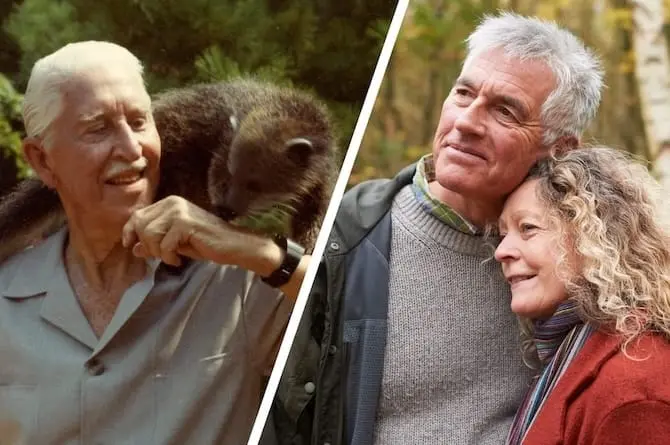
Expert insights from Sarah Holaday, Endangered Wolf Center director of animal care and conservation, and SAFE Mexican wolf co-program leader
Mexican wolf recovery began with just seven wolves in 1977. Today, 317 live wild in the U.S., with roughly 30 to 40 more in Mexico. Zoos and conservation centers, such as the Endangered Wolf Center founded by Marlin and Carol Perkins, bred those founders and helped return wolves to Arizona and New Mexico starting in 1998. Now ranchers, conservation groups and more than 60 partner institutions in two countries are working to help the gray wolf’s smallest subspecies keep growing.
Key takeaways
- Every Mexican wolf alive today descends from seven founders.
- Pups from zoos are placed with wild litters before they’re two weeks old. This process is called fostering.
- The wild U.S. population has grown for 10 straight years.
- Ranchers are central to recovery because they manage the land the wolves live on.
Quick facts
- Scientific name: Canis lupus baileyi
- Often called “el lobo,” Spanish for the wolf
- Smallest subspecies of the North American gray wolf
- Status: Listed as endangered since 1976
- Size: Between 60 and 85 pounds; males are slightly larger than females
- Historic range: Southwestern U.S. into Mexico
- Pack size: Small family groups, consisting of an adult pair, pups born last year and newborn pups
- Breeding: Once a year, from late January to mid-March. Gestation is about 63 days.
- Wild population: 317 in the U.S. as of the last count in 2025, plus about 30 to 40 in Mexico
- First U.S. release: 1998 with 11 wolves
- First Mexico release: 2011
- Lifespan: 7 to 10 years in the wild
- Diet: Carnivores that prey on large animals, such as elk and deer
How did Mexican wolves come back from just seven animals?
Mexican wolves came back because conservation centers took in the last seven known wolves and learned to breed them. In 1977, biologists realized the species was nearly extinct. They searched the U.S. and Mexico but found only seven wolves. Some of those founders went to the Endangered Wolf Center in Eureka, Missouri, where their offspring helped rebuild the population.
“Every Mexican wolf alive today can trace its roots back to the center because everybody’s related to our founders,” said Sarah Holaday, director of animal care and conservation at the Endangered Wolf Center and SAFE Mexican wolf co-program leader.
For 21 years, the center and its partners worked to learn about Mexican wolves and the best ways not only to breed them but also how to help them raise pups successfully.
“When you only have seven, it’s a little bit stressful. We had to go through that experience and see if it was even a possibility to grow the population,” Holaday said.
Wolves were a challenging species to start with. Little was known about keeping them in human care, few large carnivores had ever been reintroduced and wolves only breed once a year.“So this was one big grand experimental risk for everybody involved. It involved a lot of collaboration across departments, zoos and facilities to coordinate in an effort like this. And that’s why it took so long,” Holaday said.
Conservationists also looked to the American red wolf — the first large carnivore reintroduction program in the U.S. — as a model.
In 1998, 11 Mexican wolves were released into the wild, reintroducing this endangered species to its native habitat. Two of the 11 came from the Endangered Wolf Center, and the remaining nine had a parent or grandparent born there.
How many Mexican wolves are left in the wild?
As of the last count in 2025, there are 317 Mexican wolves in the wild in the U.S. and an estimated 30 to 40 in Mexico. In the U.S., the population has grown each year over the last 10 years.
“That’s an incredible success story,” Holaday said.
Conservationists are following the U.S. Fish and Wildlife Service’s recovery plan that outlines criteria for the species to be considered recovered and removed from the federal endangered species list. The plan looks at more than numbers. Genetic diversity counts too.
“One of them is genetic diversity because population size doesn’t always mean it’s a healthy population,” Holaday said.
That’s where fostering comes in.
What is Mexican wolf fostering?
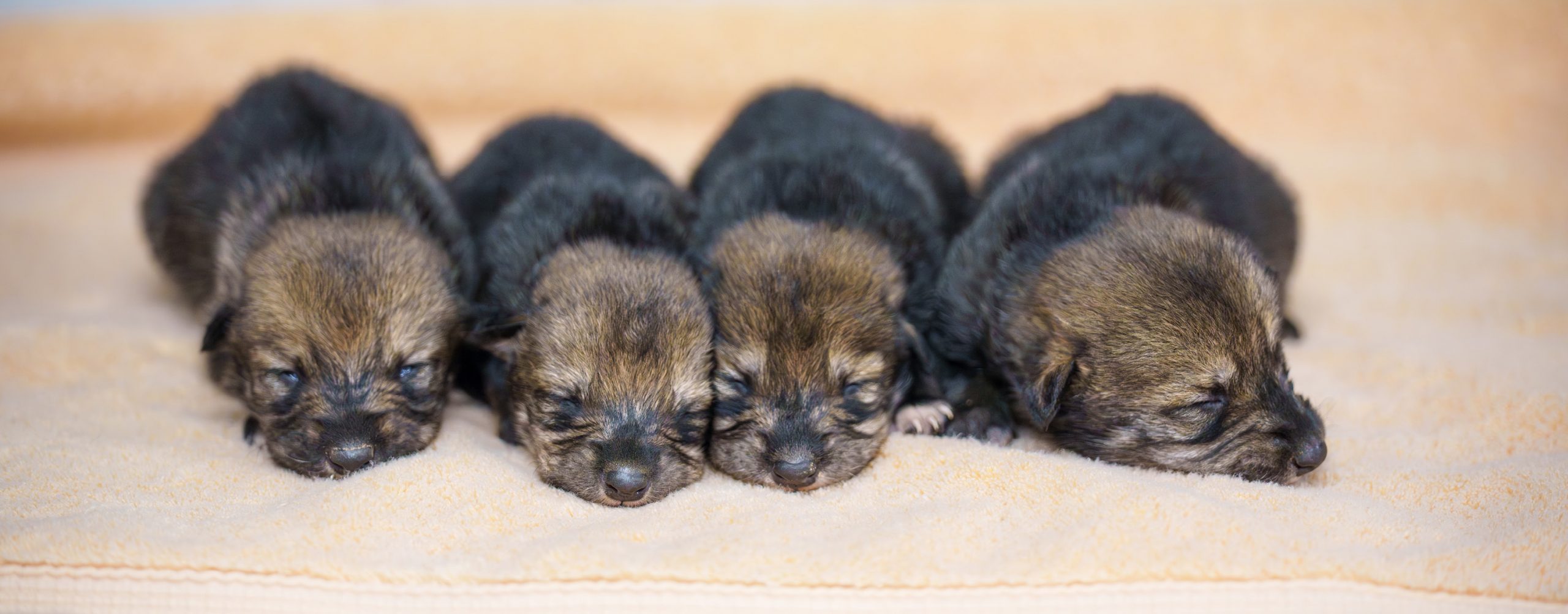
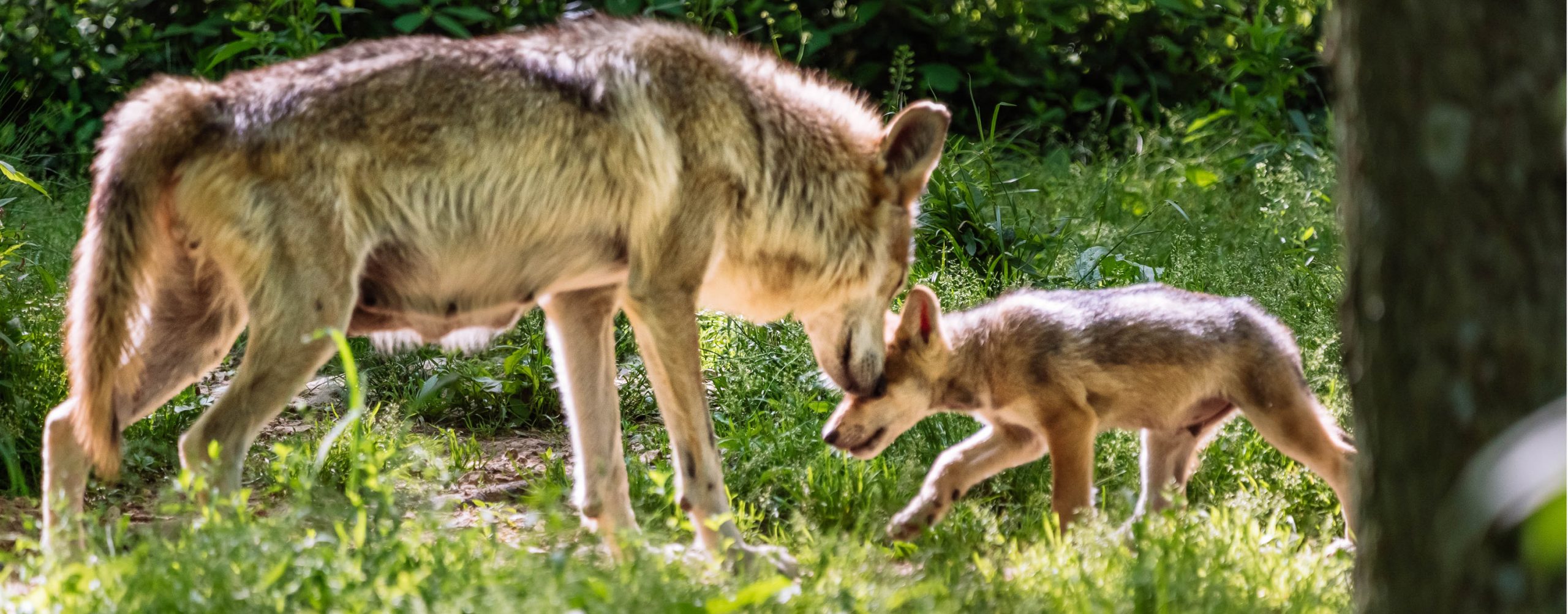
Mexican wolf fostering is when pups born in human care are placed with a wild litter to be raised by wild parents. The pups are less than 14 days old when they arrive at the wild den.
“Wolf moms are incredibly mothering. They have a strong maternal instinct,” Holaday said. “Any puppies that are placed into that litter, they’re going to take care of.”
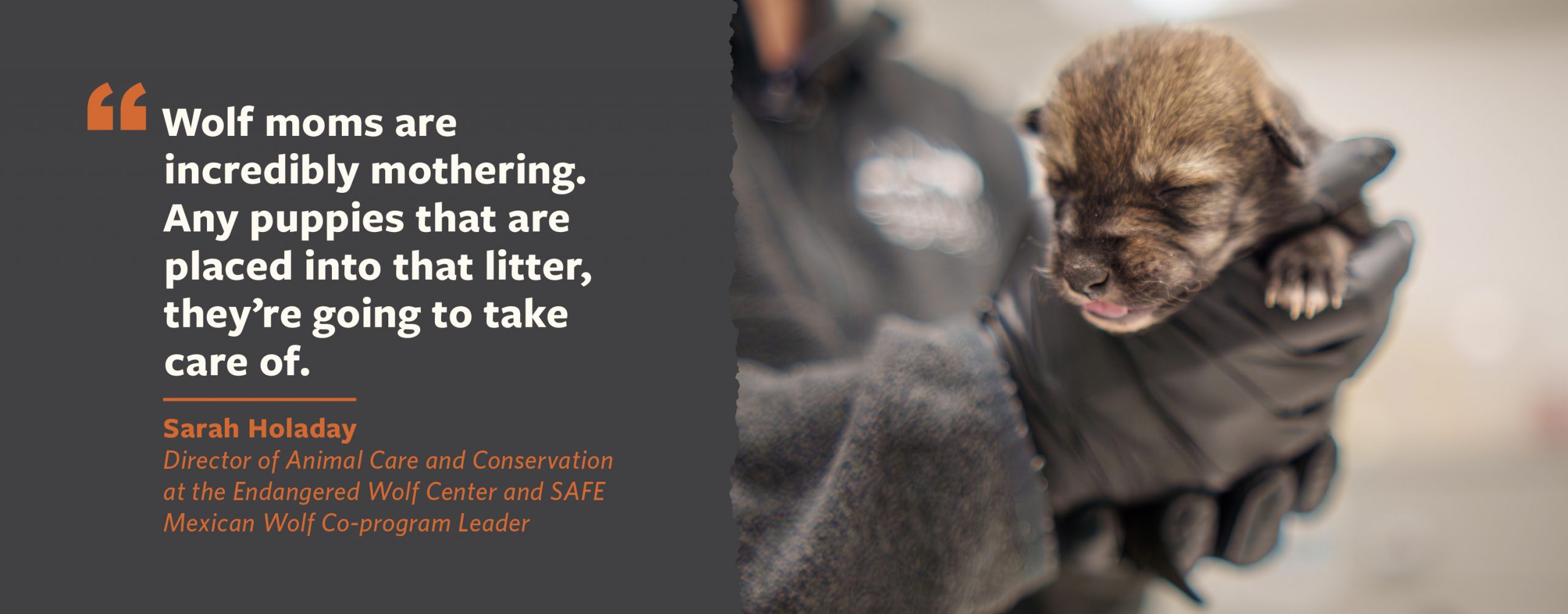
Photo courtesy of Victoria Ziglar | Bright Coral Creative | Endangered Wolf Center
Pups raised by wild parents learn to avoid people, hold a territory and hunt natural prey.
Pup fostering takes careful planning among zoos, conservation centers and the interagency field team in Arizona and New Mexico. Here’s how it works:
- Staff members track breeding behavior from late January to mid-March.
- They estimate due dates — wolf gestation is about 63 days.
- The interagency field team identifies wild females that have the same due date as the females in human care.
- Wolf pups are born, and the teams coordinate transport.
- Pups are flown to Arizona or New Mexico and placed in a wild den.
The process takes flexibility. On the trip filmed for Mutual of Omaha’s Wild Kingdom Protecting the Wild episode “Leader of the Pack,” rain, hail and snow fell on the same day, grounding the helicopter that was supposed to carry the pups the rest of the way. The change added four hours, but the pups made it to their new den.
“They’re constantly having to pivot and change direction and replan,” Holaday said. “And that’s truly at the heart of the reason why Mexican wolves are here today. It’s because of collaboration.”
Do wolves accept fostered pups?
Yes, fostered pups are accepted, and there’s no known case of a rejection.
When a wild litter is already large (about 12 to 14 pups), the team doesn’t want to put an additional burden on the parents. Instead, sometimes wild pups will be brought back into human care, a process called cross-fostering.
Holaday has even watched on den cameras as a female wolf pulled a foster pup in and started nursing it within an hour.“They don’t care whether they’re biologically theirs or not,” Holaday said. “A lot of the wild wolf families are actually blended just like ours are, which is pretty cool.”
How are fostered pups tracked?
Fostered pups are tracked with a microchip and monitored through trail cameras near the den site. The field team uses the cameras’ photos and videos to count pups and see how they’re doing.
“They see them fully integrated in, eating with the pack, hanging out with them and learning with them,” Holaday said.
When the pups grow to be about 1 to 1 1/2 years old, they’re finally big enough to wear a collar like the adult pack members. The interagency field team traps them and puts tracking collars on them so the team can track more consistent data.
Why does genetic diversity matter for Mexican wolves?
Genetic diversity matters because every Mexican wolf alive today descends from the same seven founders. Keeping the population as genetically varied as possible has been a top priority since the program began.
Fostering and cross-fostering move pups between the wild and human-care populations, mixing family lines that would otherwise stay separate.
“It’s really valuable to cross the genetics from the wild population and the human-care population, because we need to maintain that genetic diversity,” Holaday said.
The center is also testing new ways to keep the gene pool healthy. Nashoba, a male at the Endangered Wolf Center, was born through artificial insemination with frozen-thawed semen.
“He’s the only Mexican wolf pup to this day born using that technique,” Holaday said. He has since sired three litters, and many of his pups have gone into the wild.
What’s the SAFE Mexican Wolf Program?
The SAFE (Saving Animals From Extinction) Mexican Wolf program is a binational recovery program through the Association of Zoos and Aquariums. It works with over 60 partners in the U.S. and Mexico.
It builds on the earlier Species Survival Plan (SSP), which focused on Mexican wolf populations in human care, by adding fieldwork, conservation and coexistence with people.
“When we first transitioned from an SSP to a SAFE, we decided to ask ourselves three major questions: ‘What does success look like? How do we get there? Who should be involved in this?’ And the common answer was that zoos really should be rallying support from those conservation partners that collaborate alongside wolves. That’s how we began widening our focus to include that human component,” Holaday said.
How do ranchers and Mexican wolves coexist?
In Chihuahua, Mexico, cattle graze the same land Mexican wolves roam. Coexistence can look like working guard dogs, installing fox lights that make wolves nervous so they stay away from livestock and bringing cows in during calving season.
With help from Fundación Tonkawa, one of the SAFE Mexican Wolf program’s coexistence field partners, ranchers are finding ways to earn a living from land that also supports wolves.
“Our job as conservationists is to really approach people living alongside wildlife with curiosity and humility so that we can understand what they need and we can find a solution together,” Holaday said.
Fundación Tonkawa first did a market analysis of beef products. Working with the ranchers, Fundación Tonkawa is exploring how the ranchers’ products can be sold at a premium because of their conservation techniques. Ranchers in the area now make items, such as beef jerky dog treats, beef tallow lotion and candles.
“We’ve taken our time in visiting the recovery areas and reaching out to people and establishing relationships because you can’t move conservation faster than building trust. Building trust needs to come first,” Holaday said.
The goal is to help both wolves and ranchers thrive. Wolves can return to native habitat, while ranchers are still able to make an income.
“Right now, the current heroes are those ranchers. They are the ones learning to live alongside them. They’re the ones stewarding that land and keeping it from being developed from cities and for other uses,” Holaday said.
Why are Mexican wolves important to the ecosystem?
Mexican wolves are a keystone species, which means they greatly affect the land around them. As top predators, they help keep deer and elk populations in check and support biodiversity.
“Mexican wolves truly help from a top-down perspective. They’re the ones that are going to help keep some of those populations in check,” Holaday said.
What was Marlin Perkins’ role in saving the Mexican wolf?
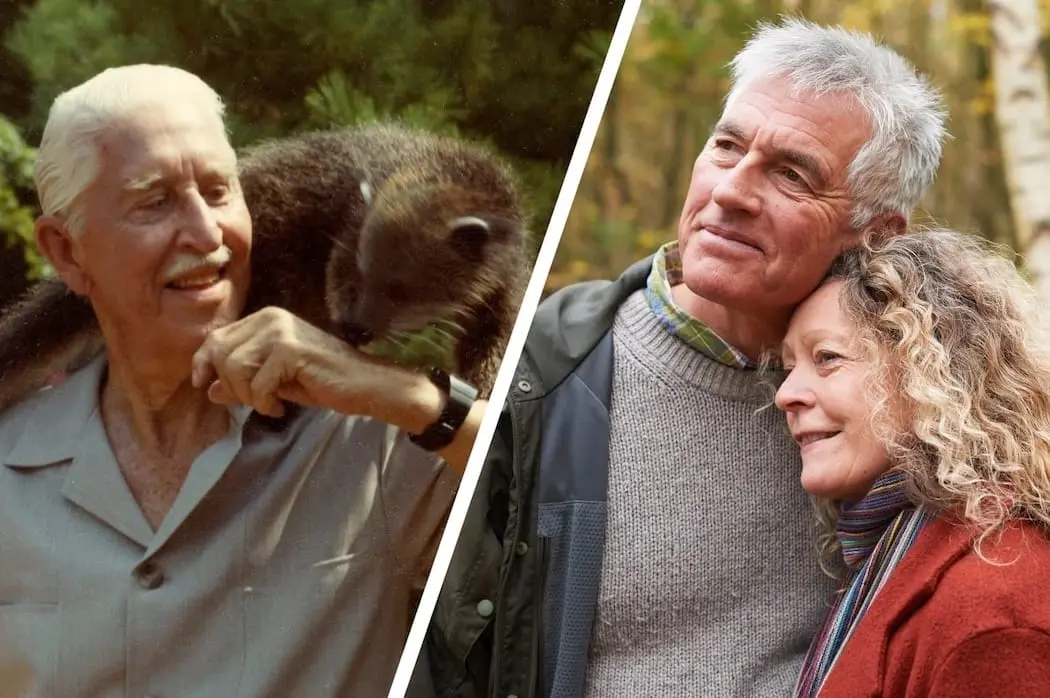
Marlin Perkins, host of Mutual of Omaha’s Wild Kingdom, and his wife, Carol, founded the Endangered Wolf Center in Eureka, Missouri, in 1971. Every Mexican wolf alive today can trace its lineage back to the center.
“They recognized, way ahead of anyone else, that wolf species and other canids in the wild, those populations were declining and they were going to need some serious help,” Holaday said.
What’s life like for wolves at the Endangered Wolf Center?
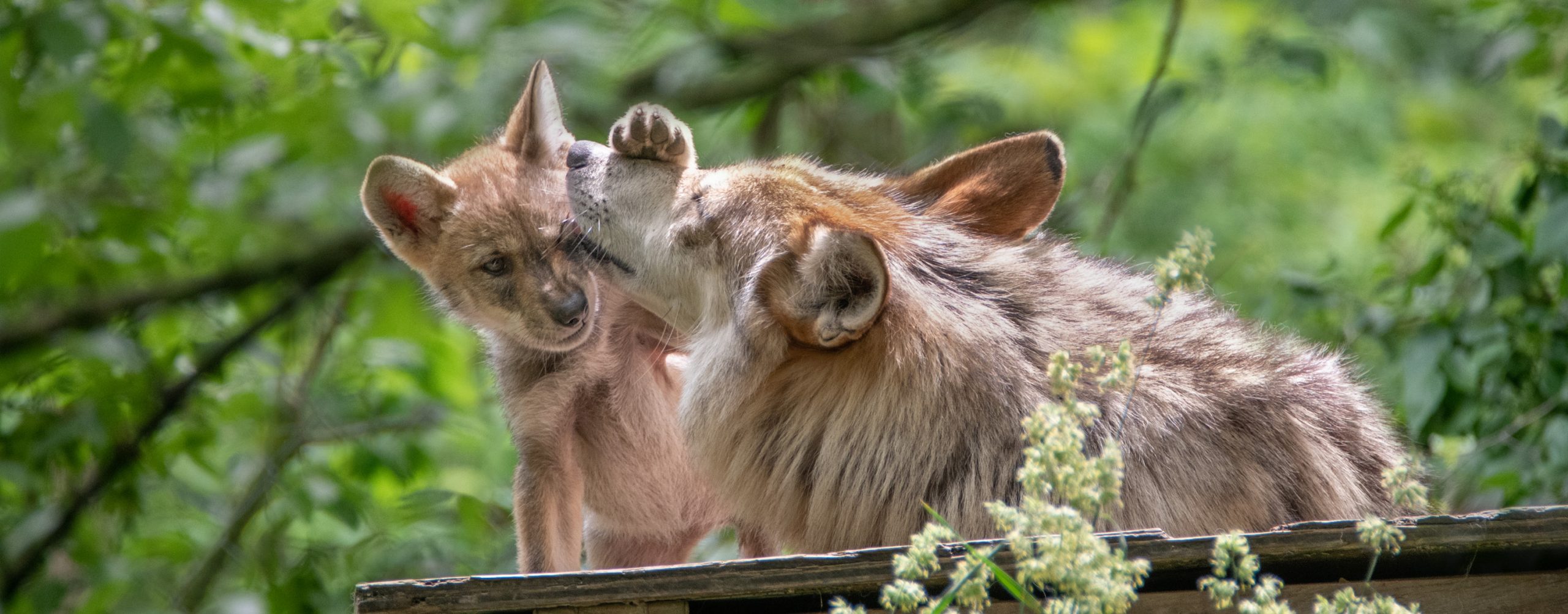
There are around 20 to 25 Mexican wolves at the Endangered Wolf Center, who live in multigenerational family groups in natural habitats of 1 to 2 acres. Wolves are social, and living in a pack helps them learn how to survive in the wild.
A year for a wolf at the center includes a winter breeding season and denning with pups, just like they would in the wild.
Holaday and her team at the center limit human contact as much as possible so the wolves don’t get used to people, because every wolf in human care has the potential to be released into the wild.
“We let them have their natural aversion to people and establish and display those natural behaviors,” Holaday said.
How are Mexican wolves different from other gray wolves?
Mexican wolves are the most genetically distinct subspecies of gray wolf. They’re the smallest, weighing around 60 to 85 pounds. Unlike other gray wolves, Mexican wolves also have smaller packs — usually just an adult male and female, pups from the previous year and newborn pups.
Frequently asked questions about Mexican wolves
How many Mexican wolves are left in the wild?
There are 317 Mexican wolves in the wild in the U.S., according to the most recent U.S. Fish and Wildlife Service count in 2025. In Mexico, there are an estimated 30-40 wild wolves.
How many Mexican wolves were left before recovery began?
Before recovery efforts began in 1977, only seven Mexican wolves were found in the wild.
What’s cross-fostering in wolves?
Cross-fostering is when wild wolves are placed in human care to breed and promote genetic diversity in the species.
Where do Mexican wolves live?
Mexican wolves live in New Mexico, Arizona and Mexico.
Who founded the Endangered Wolf Center?
Marlin and Carol Perkins founded the Endangered Wolf Center in Eureka, Missouri, in 1971.